I Just Launched the AI Pledge for Humanity. Here’s Why.

AI leaders keep saying UBI is necessary. This pledge asks them to prove it.
I’ve been working on universal basic income full-time since 2013. Thirteen years. In that time, I’ve watched the conversation shift from “that’s a crazy idea” to “that’s inevitable.” Especially among the people building AI. And I’ve watched that shift accomplish very little.
That’s the problem I want to talk about today.
It is now routine for AI leaders to say that something like UBI will be necessary. Elon Musk recently posted that “Universal HIGH INCOME via checks issued by the Federal government is the best way to deal with unemployment caused by AI.” He’s been saying versions of this since 2016. Demis Hassabis, CEO of Google DeepMind and a Nobel laureate, told CNN we may need “universal high income” so that AI’s productivity gains are distributed across the economy. Mustafa Suleyman, now CEO of Microsoft AI, warned in 2023 that AI would create “a serious number of losers” and called UBI a measure we need to start talking about “in a serious way.”
But are they truly being serious about it? Rep. Alexandria Ocasio-Cortez recently told Semafor she is skeptical of tech billionaires’ stated support for UBI, saying the devil is in the details of their willingness to actually fund it. She’s right to be skeptical. The words are everywhere. The action is almost nowhere.
I say almost because there are a few notable exceptions. One of them is Sam Altman who put $14 million of his own money into a three-year basic income pilot — one of the largest in American history. It mattered. It was real money behind a real commitment. Jack Dorsey, through his #startsmall fund, also directed tens of millions of dollars to UBI pilots and research between 2020 and 2023 — including major support for Mayors for a Guaranteed Income, the OpenResearch pilot, and Humanity Forward. Together, Altman and Dorsey are the rare exceptions. But they also highlight how alone they are in having done it.
Meanwhile, the man on track to become the world’s first trillionaire spent his truly massive amount of resources dismantling government programs through DOGE.
The way Elon Musk talks about UBI is personal for me. Years ago, a friend of mine named Gerald Huff worked at Tesla as a principal software engineer who helped develop the Model 3. Gerald could see where automation was heading. He started speaking publicly about the need for UBI. Elon eventually called him into his office and told him to stop talking about UBI or he’d be fired. So Gerald stopped accepting speaking invitations — and started directing them to me instead. That’s how I ended up giving many of the talks that helped build my career in this work. Gerald died of pancreatic cancer in 2018 at the age of 54, before he could see UBI gain the traction it has today. His mother Gisele founded the Gerald Huff Fund for Humanity in his name to carry on his UBI mission. I’ve served on its board since its inception.
What Elon did to Gerald is documented in Gisele’s memoir, Force of Nature. So when I watch Elon Musk post about “universal high income” to an audience of millions — while having personally silenced one of the people inside his own company who tried to advocate for it — I know what the gap between words and actions looks like. If Musk has quietly funded UBI efforts, I’d welcome the correction. I know of others who quietly have, so he wouldn’t be the only one, but color me skeptical.
The pattern is always the same: predict mass disruption, then treat preparing for it as someone else’s problem. And here’s what makes it worse: their casual UBI predictions give everyone else permission to not take AI seriously. When the people creating the disruption treat UBI as a prediction, or even just marketing, rather than an urgent priority, the rest of the world reasonably concludes that the disruption must not be that bad. If the architects of AI aren’t panicking, why should anyone else?
But it is that bad. For fifty years, productivity has soared and wages haven’t. AI is about to accelerate that pattern — driving down wages long before it replaces workers entirely. The disruption is not some distant hypothetical. It’s here. It’s happening in paychecks right now, quietly, before the headlines catch up. It’s happening in the lack of hiring entry level workers. It’s happening in the unusually high unemployment and underemployment rates for recent college graduates. It’s happening through early retirements. More will happen. It will get worse.
Well, I got tired of waiting for the people who should be leading on this to actually lead. So I built something.
The AI Pledge for Humanity
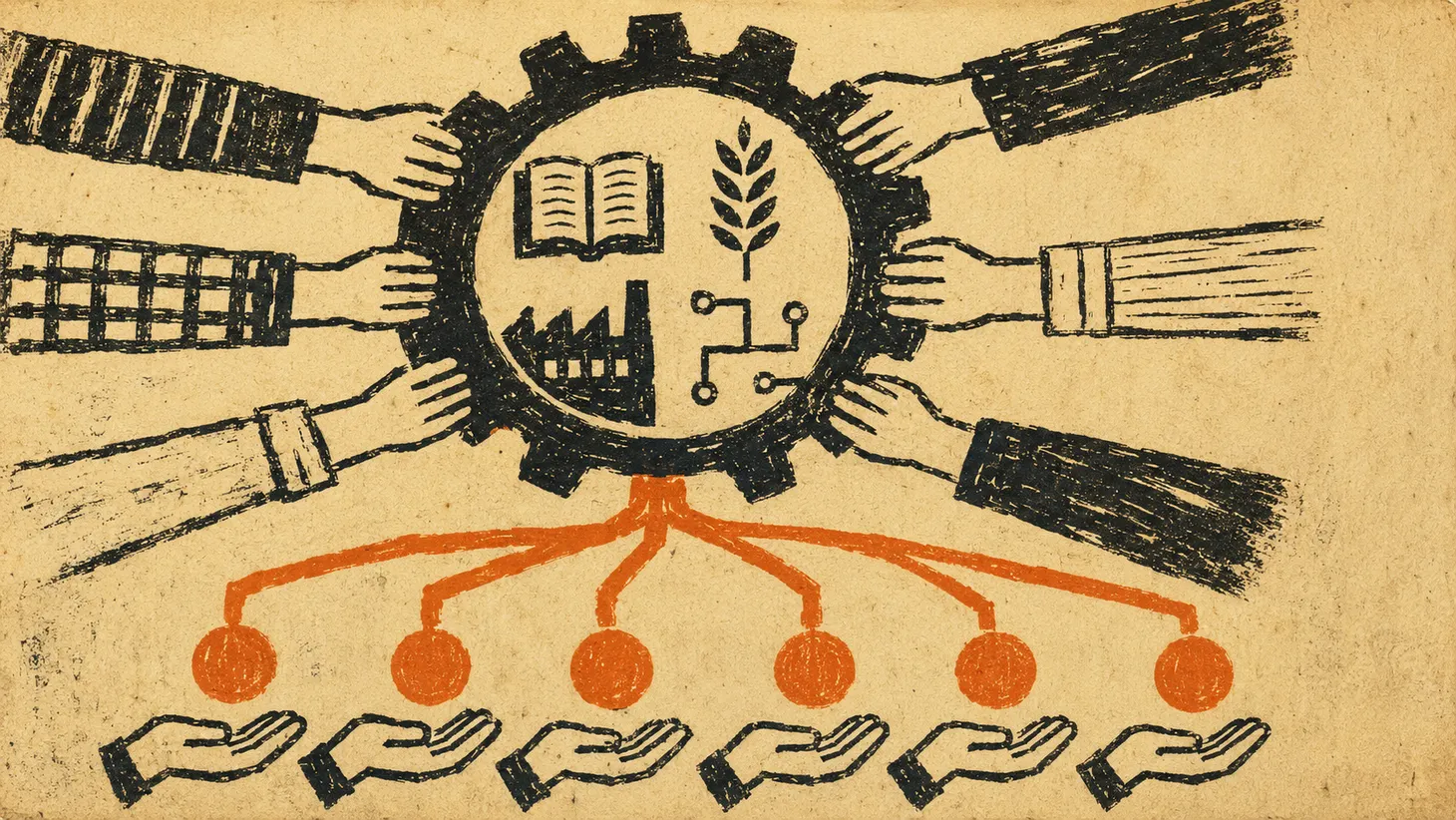
Today, I launched the AI Pledge for Humanity — an open letter and public commitment to turn AI’s wealth into a shared dividend for everyone.
The pledge has two tiers, and both matter.
The first tier is for people with resources to commit. Founding signatories go public with their commitment to invest a percentage of their income or wealth into UBI pilots, unconditional cash programs, and the advocacy work needed to make a shared AI dividend real. Their names, affiliations, and the organizations they support are listed publicly on the pledge page. This isn’t a vague promise. It’s a public, named, specific commitment — and it’s designed to be exactly the kind of thing that the people who keep talking about UBI should be doing but aren’t.
The second tier is for everyone else. If you aren’t in a position to commit resources but believe AI’s gains should be shared, you sign the petition in solidarity. Your signature joins the call and pushes those profiting from AI to step up. You become part of the pressure.
I think of these two tiers as complementary forces. The founding signatories are the proof that serious people are willing to put their money where their mouth is. The petition signers are the weight behind the demand that others do the same.
Why This, Why Now
I’ve written hundreds of thousands of words about UBI. I’ve spoken at conferences around the world. I’ve advised political campaigns. And I believe that at this particular moment, the single most important thing the UBI movement needs is not another study, not another pilot, and not another article. It’s accountability. It’s action.
The conversation about AI and UBI has become too comfortable. People say the right things and do nothing. The AI Pledge for Humanity is designed to make that gap visible. It creates a public record of who is actually backing UBI with resources and who is just talking. And it gives everyone else a tool — a link they can share every time some tech leader mentions UBI without doing anything about it. A way to say: if you believe it, sign it. If you won’t sign it, we know what your belief is worth.
I believe this matters because UBI is not just an economic policy. An unconditional income floor does not just distribute money. It distributes freedom. It’s the power to say no — to bad wages, to unsafe conditions, to abusive situations. It’s the power to negotiate the terms of your own labor and the policies that govern your life. No other policy does this. A higher minimum wage doesn’t. A four-day workweek doesn’t. Unemployment insurance doesn’t, nor does it even reach more than about 30% of the unemployed, let alone everyone doing essential work who are underpaid or entirely unpaid. UBI reaches everyone, because everyone is the point.
And we can do this. An economy capable of producing unprecedented wealth is capable of sharing that wealth. The question has never really been whether we can afford it. The question is whether we will choose to do it.
One more thing worth saying plainly. The signatories of this pledge are committing private resources, but private resources alone won't fund UBI at sufficient scale. That requires public investment, which requires that those who benefit most from AI contribute the most to making sure its gains are shared. Wealth taxes. Corporate taxes. Whatever mechanism gets us there. The wealthy people who are actually serious about UBI will recognize that personal giving and supportive policy go together — that you can't credibly say you want a shared AI dividend while lobbying against the means to fund one. History tells us what happens to societies when wealth concentrates at the top and stays there. We should not need to relearn that lesson.
What I’m Asking You to Do
Three things, in order of commitment:
Sign the petition. It takes thirty seconds. Your name adds pressure. It tells every tech CEO, every AI investor, every founder who mentions UBI that the public is watching and expects them to act. Sign here.
Share it. Post it. Email it. Text it. And when you see someone powerful talk about UBI without backing it up, reply with this pledge and ask them: will you sign it?
Become a founding signatory. If you have resources to commit — whether that’s 1% of your wealth or 5% of your income or anything you choose — add your name to the public list of people who are putting their money behind their belief in the need for UBI. You can include a link to the UBI organization or project you support, helping others discover where to direct their own resources. Fill out the form here.
We already have founding signatories including Andrew Yang, Dustin Moskovitz, and other founders and co-founders, CEOs, engineers, AI managers, researchers, and advocates from multiple countries. The list is growing. I want your name on it too.
The Line in the Sand
I’ve spent 13 years making the case for UBI. I believe the case is made. The evidence is overwhelming. The logic is clear. The history is deep — from Thomas Paine to Martin Luther King Jr. to Milton Friedman, this idea has allies everywhere.
What we lack is not evidence. What we lack is action.
The AI Pledge for Humanity draws a line. On one side are those willing to do something. On the other side are those content to predict a future they have no intention of building. I know which side I’m on.
We all made AI possible. We all deserve a share of what it makes possible.
If you agree with that statement, sign the pledge. And then send it to someone who needs to sign it more than you do.

UBI Guide Newsletter
Join the newsletter to receive the latest updates in your inbox.